
What Can a 4D Kitchen Bring to Enterprise and Institutional Canteens?
— Not a Deep Clean, Not Sticking Labels, but a Management Revolution
Many canteen managers' first reaction to the phrase "4D Kitchen" is: "Another deep clean?" "Another pile of labels?" "Will our staff be even more exhausted?"
If you share these doubts, this article is written for you. By the end, you'll see that a 4D Kitchen actually lightens your burden — it doesn't add to it.
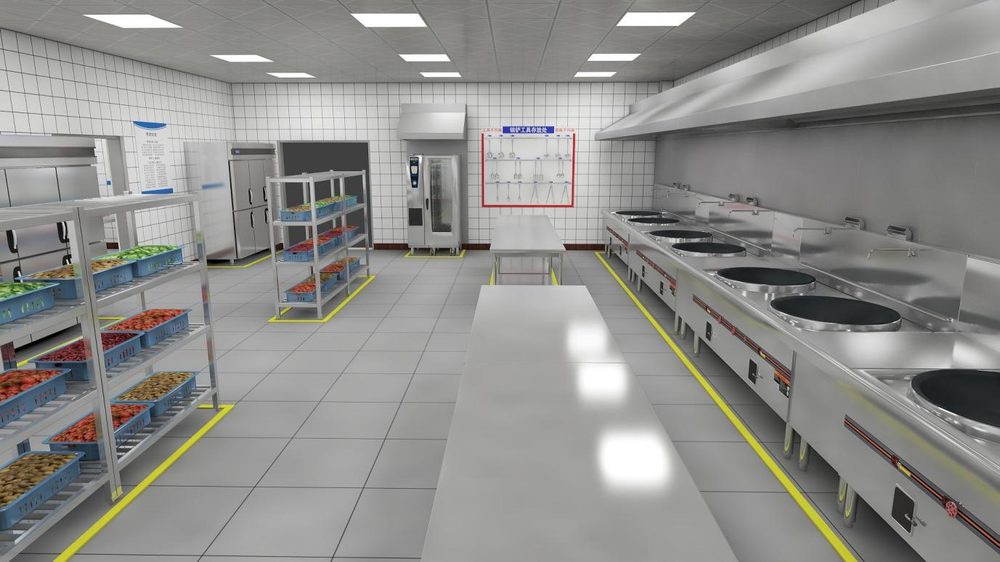
Fig.1 Kitlalong Commercial Kitchen Design — Rendering of a 4D Canteen Cooking Area
What Is a 4D Kitchen?
In simple terms, a 4D Kitchen means four "D's in place" — Sorting in place, Responsibility in place, Training in place, and Execution in place.
These four "in place" elements build on one another, with the ultimate goal of transforming the kitchen from "working by experience" to "running by standards."
In one sentence: it is not a one-off hygiene campaign, but a management system that keeps the back kitchen efficient, safe, and tidy on an ongoing basis.
So What Can Implementing a 4D Kitchen Actually Bring?
For enterprise and institutional canteens, the value of 4D can be distilled into four core benefits: safety assurance, efficiency release, cost reduction, and image upgrade.
🔒 I. Safety Assurance: Eliminating the "What Ifs" Through Systems
The biggest risk in a canteen is a food safety incident. Traditional management relies on individual conscientiousness, while 4D, through "Responsibility in place" and "Sorting in place," locks safety responsibility into every inch of space and every piece of equipment.
▪ No blind spots in responsibility: Every zone and every piece of equipment carries a "4D Management Card" specifying the responsible person, operating standards, and inspection criteria. Whoever uses it is responsible, whoever checks it is accountable — eliminating the "everyone's business is no one's business" excuse.
▪ Visualized operations: Knives, cutting boards, and containers follow strict color coding — red for raw meat, blue for seafood, green for vegetables, and white for cooked food. Raw/ready-to-eat separation is no longer a slogan but an operating standard you can follow at a glance.
▪ Traceable sources: Food sample retention, disinfection records, and purchasing ledgers are all recorded to standard. When a problem occurs, the source can be traced quickly.
According to statistics, canteens that successfully implement 4D can reduce food safety incident rates by more than 80%.
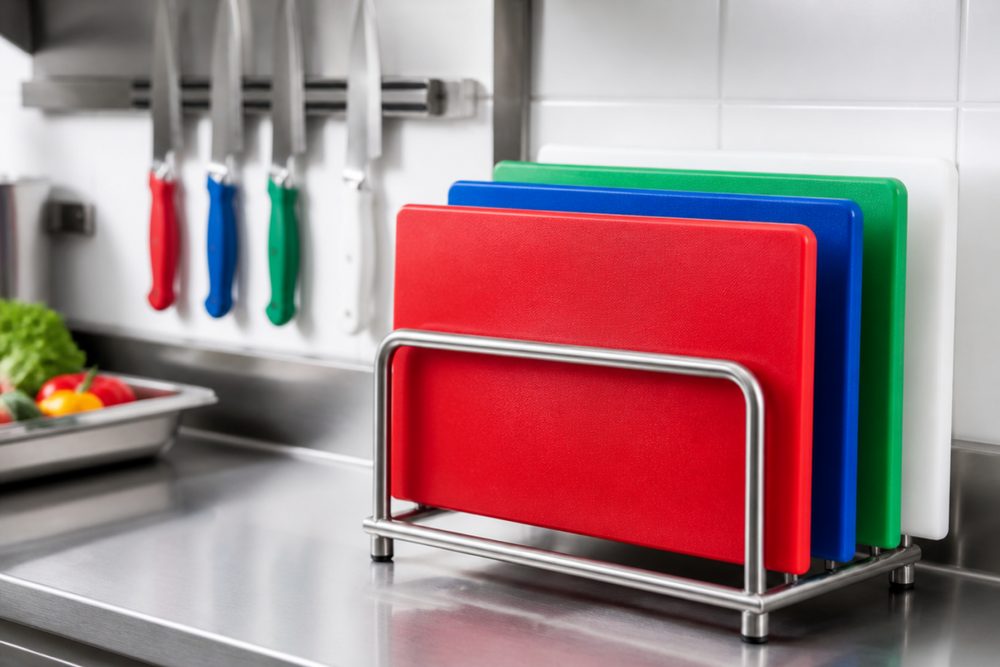
Fig.2 Color-coded management: knives and cutting boards positioned by color — raw and ready-to-eat clearly separated
⚡ II. Efficiency Release: Helping Staff Say Goodbye to "Ineffective Busyness"
Common scenes in a traditional kitchen: a chef searching everywhere for seasonings while cooking, a prep worker digging through piles of clutter for a cutting board. These "invisible wastes" consume time and energy every single day.
4D completely eliminates this waste through location management that lets staff "find any item within 30 seconds."
▪ Less motion waste: All tools, seasonings, and ingredients have fixed positions. Staff no longer have to think about "where to put it" or "where it is," making every movement smoother.
▪ Shorter walking distances: By re-planning functional zones and item placement, frequently used items are placed at the most convenient positions, reducing unnecessary walking.
▪ Lower communication costs: Standardized processes and signage systems allow new staff to get up to speed quickly.
Per-capita efficiency can improve by more than 20%.
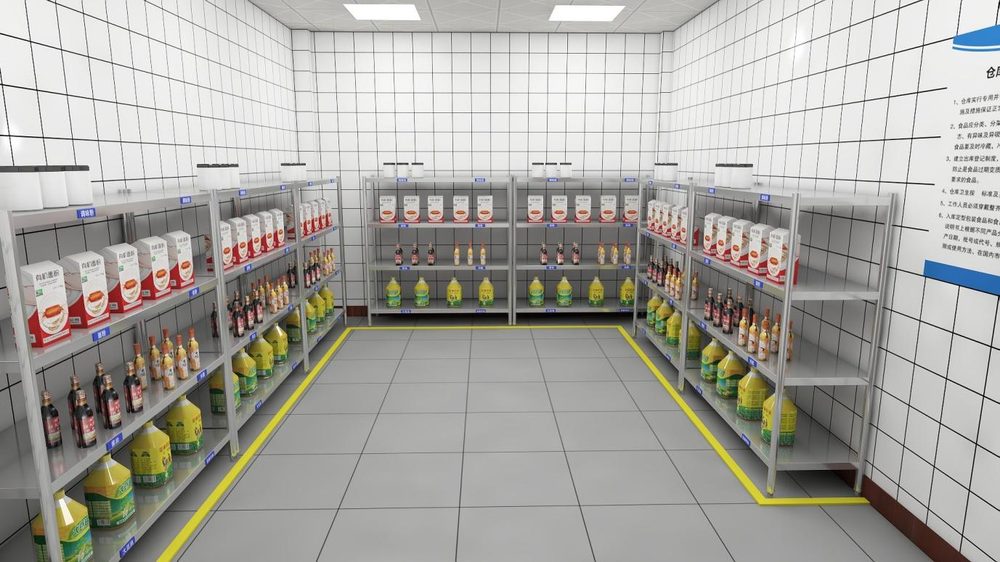
Fig.3 Kitlalong Commercial Kitchen Design — Warehouse seasonings arranged by label
💰 III. Cost Reduction: Squeezing Profit Out of "Invisible Waste"
In canteen operations, a large share of costs is devoured by hidden waste — expired ingredients, damaged equipment, excessive energy consumption... 4D plugs these "black holes" one by one through refined management.
▪ Less food waste: "First-in, first-out" warehouse management and clear expiry labels prevent losses from ingredients forgotten and expired.
▪ Longer equipment life: Equipment responsibility is assigned to individuals with regular maintenance, significantly reducing failure rates.
▪ Energy savings: Standardized operations (e.g., turning off steamers when not in use, closing cold room doors promptly) reduce water, electricity, and gas consumption.
Food waste rates can drop by 10%–15%, and energy consumption by 5%–10%.
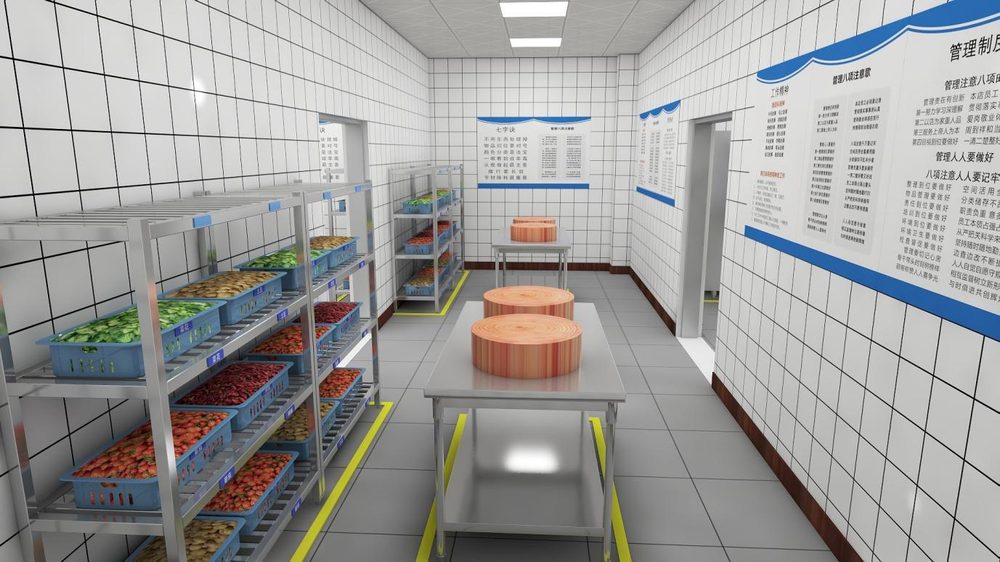
Fig.4 Kitlalong Commercial Kitchen Design — Processing Room Rendering
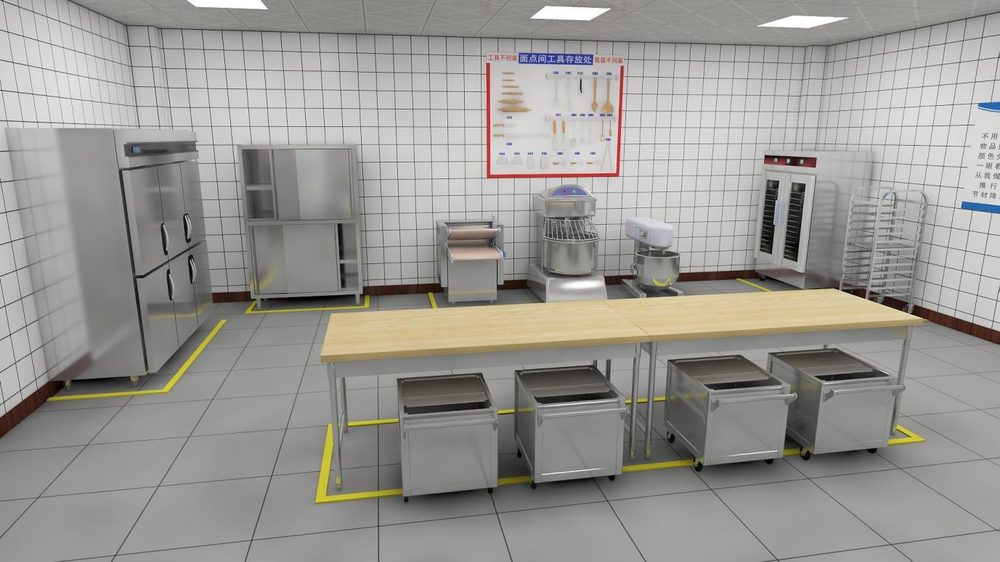
Fig.5 Kitlalong Commercial Kitchen Design — Bakery Room Rendering
🌟 IV. Image Upgrade: From "Behind the Scenes" to "Front and Center"
In the era of the open kitchen ("bright kitchen, clean stove"), the back kitchen is no longer an off-limits zone. A 4D kitchen is itself the most powerful business card of trust.
▪ Supporting the open kitchen: A 4D kitchen's "uniform, clean, and bright" appearance is naturally suited to video surveillance or transparent glass display. When staff, leaders, or inspectors walk in, they see cutting boards back in place, towels neatly folded, and dry floors with no standing water — trust is built instantly.
▪ Higher staff satisfaction: Working in a clean, orderly environment significantly boosts staff's sense of professional dignity and belonging.
▪ Stronger corporate image: A high-standard 4D kitchen conveys the company's commitment to employee health and demonstrates its refined management capability.
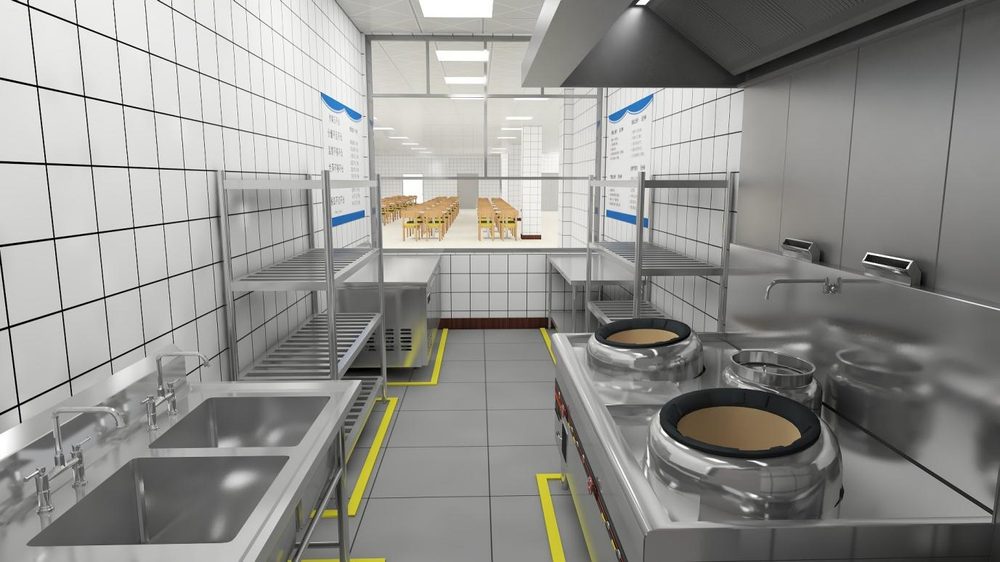
Fig.6 Open kitchen: a tidy back kitchen presented through glass — trust you can see
Summary: 4D Is Not "Extra Work" — It's a "Management Dividend"
Many canteen managers initially worry: will implementing 4D just add another pile of forms and inspections? Will staff be more tired?
The opposite is true: 4D trades a short-term "growing pain" for long-term "ease."
By solidifying standards, clarifying responsibilities, and optimizing processes, it transforms the kitchen from the reactive state of "fighting fires every day" to the proactive state of "running in order." Once the system is established, daily management actually becomes easier — because everyone knows exactly what to do, how to do it, and to what standard.
One-Sentence Summary
The meaning of a 4D Kitchen is upgrading food safety from "human prevention" to "system prevention," and operational efficiency from "experience-driven" to "system-driven." In the end, canteen managers sleep soundly, diners eat with confidence, and the company saves money.
If you're considering implementing 4D but worried about the difficulty of rollout, feel free to leave a comment — we can work out a phased implementation plan together.